CloudFront in front of private S3
The website is stored in a dedicated, private S3 bucket and served through a CloudFront distribution. Origin Access Control keeps the bucket from being used as a public website endpoint.
ARCHITECTURE CASE STUDY / AMAZON CONNECT + AWS
An entire customer experience.
One otherworldly
architecture.
A real AWS-hosted insurance demo with interactive claims, policy and support experiences. Behind the interface: a staged omnichannel Amazon Connect architecture, designed to grow without losing the customer journey.
LIVE STATIC PROTOTYPE / CONNECT INTEGRATIONS IN PROGRESS
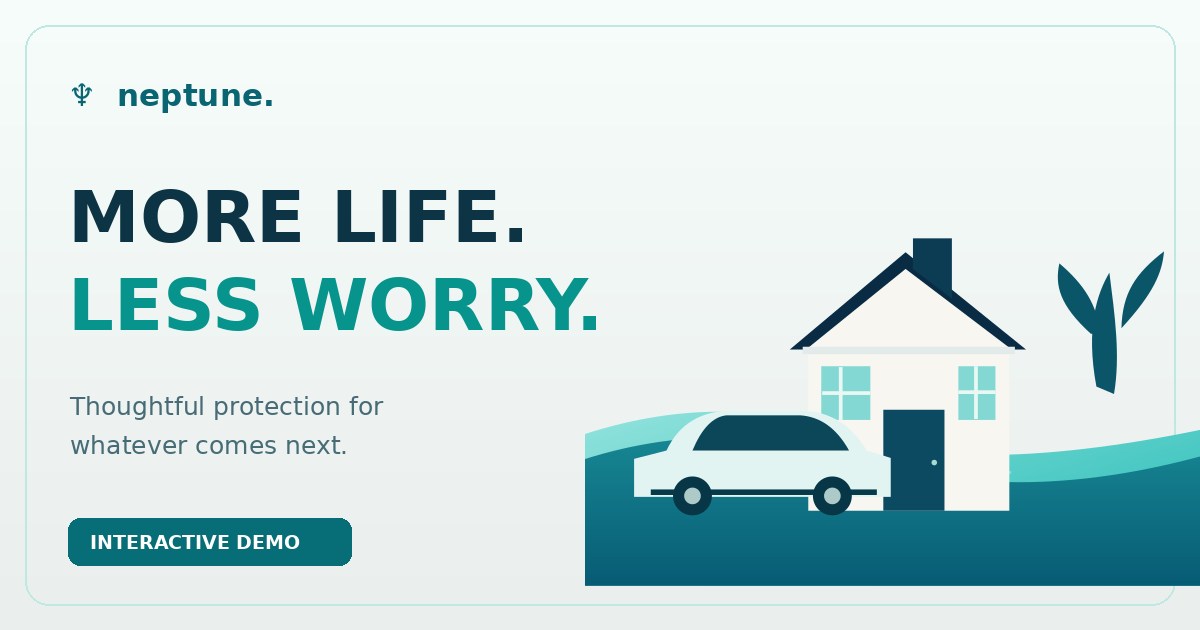 MISSION VIEW / NEPTUNE WEBSITE LIVE
ENTER CUSTOMER EXPERIENCE
↗neptune.hireedwardthornton.click
Voice, chat, SMS and email come together through Amazon Connect. The Neptune website is already live; it becomes the digital entry point for the planned web-chat and claims integrations.
↔ SWIPE TO VIEW FULL ARCHITECTURE
The website delivery row is live today. The website's future chat entry point, Amazon Connect channels, AI assistance and insurance-system integrations are proposed and will be validated individually during the lab.
Neptune is a fictional regional property-and-casualty insurer migrating from a legacy contact center. The challenge: give policyholders a clear next step without losing their context when they switch channels or teams.
An interactive, step-by-step simulated first notice of loss captures bounded sample information, creates a browser-local reference, and demonstrates how a claims handoff can be structured.
A synthetic customer dashboard surfaces example auto and home coverage, claim references and status timelines. No authentication or real insurance database is represented.
Support discovery, scripted assistant preview, and precise placeholders for Connect voice, hosted web chat, SMS and email. Channels are only marked live after configuration and verification.
Designs for policy servicing, billing, auto claims, claim status, escalations, and after-hours tasks with queue and routing-profile boundaries.
Proposed conversation automation gathers structured intent and summarizes interactions, while authorized business APIs own validation and sensitive decisions.
A traceable contact journey can correlate ContactIds, flow events, contact records, tasks, and secure, minimal customer-context attributes.
A realistic demo scenario starts online and illustrates the future end-to-end journey across channels and the specialist team.
Policyholder initiates fictional auto FNOL on the Neptune website.
Gather minimal structured details, validate and return a simulated reference.
After consent and approvals, offer voice, chat or message follow-up.
Connect targets the Auto Claims queue and passes only approved attributes.
Agent or supervisor takes action with auditability and a next-step record.
Small, testable increments for the 14-day lab. One practical integration at a time, with security and console evidence before moving on.
Responsive Neptune site, guided claim simulation, sample dashboard, help center and technical showcase.
Frontend prototype createdInstance, numbers, call flows, queue/routing profiles, 2–3 training agents, baseline call testing.
Lab build in progressHosted chat widget, callback/task patterns, messaging registration and consent, email prerequisites.
Requires configurationAgentic self-service, mock Lambda business APIs, secure context, failure tests, dashboards and teach-back.
Planned capstoneThe goal is to practice how an architect makes tradeoffs, not just which buttons to click in the console. This is the deployed foundation and the design logic behind it.
The website is stored in a dedicated, private S3 bucket and served through a CloudFront distribution. Origin Access Control keeps the bucket from being used as a public website endpoint.
The live customer demo runs at neptune.hireedwardthornton.click. The portfolio
case study lives on the main domain, preserving the existing project presentation.
Route 53 A and AAAA alias records point to CloudFront. An ACM certificate in us-east-1 secures the custom hostname. DNS validation and HTTPS response were verified during deployment.
Claims and sample policy journeys operate as a client-side prototype. Future real processing will require authenticated APIs, validation, durable storage, and auditable events.
The 500-agent model is a reference architecture, not 500 provisioned Connect users or 500 concurrent calls. Routing profiles, concurrency, and quotas will be modeled separately.
SMS will be added only after sender verification, compliant opt-in, and successful delivery tests. A fictional insurance demo is not presented as a licensed insurer.
This project is versioned by milestone. Completed work is separated from planned capabilities; the GitHub repository tracks source, architecture notes, and next steps.
Website source, deployment scripts, architecture decisions and milestone documentation.
Published Neptune via CloudFront and validated the custom hostname, certificate, private bucket, and homepage.
Move project source into a dedicated workspace, track milestones in GitHub, and connect the website's first real contact channel.
This is a fictional training and portfolio project. No real policies are sold, and no real customer submissions should be entered.
Project integrity: This is a training and portfolio demonstration. Neptune Insurance is fictional. The website is runnable as a static prototype; the cloud architecture is a staged implementation and target design. The AWS toll-free messaging registration, if pursued, must truthfully identify the actual registering business (Cloud Systems Direct LLC), not use this fictional insurer as proof of an operating business. Synthetic data only; no real customer records or insurance services.